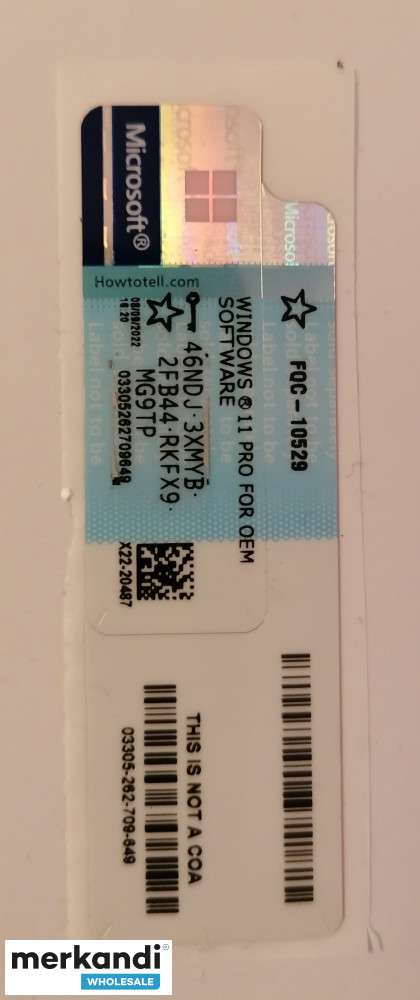
A low-cost 'windows OEM' key is irresistible. Searching for "windows license" or "windows 11 purchase" will show prices that are a fraction of Microsoft retail costs, while providing the same authentic Windows experience. The market is a minefield of digital costs, and "cost-effectiveness" can quickly become "catastrophically costly." It's not a cheap purchase, but it is a risky purchase that could end up compromising the security of your entire computing ecosystem. These risks extend beyond the deactivation of a watermark. They could affect the security of your computer, your ability to use critical software like Office or even your legal standing. This guide exposes the 10 truths that lie behind the attractive price. It explains the ways they impact your software health in general including the performance of antivirus to future server upgrades.
1. The Myth of "Genuine", "Legitimate" and "Authentic": Knowing the Key Origin.
Windows activation keys aren't always authentic. These cheap `windows 11 home key` or Pro keys typically originate from one of three illicit channels: 1) Volume License keys leaked or resold in contravention of Microsoft's Terms, 2.) OEM keys designed for developers of systems (MSDN, TechNet) being sold, or) Keys from cheaper regional markets that are resold worldwide (grey market). The software could appear to appear to be "activated" but you actually hold the Microsoft Software License Terms license. It is an imitation that can be cancelled at any time.
2. Revocation has an effect that is domino-like It's more than just your windows.
It's not the desktop's black color that's the main issue however, it's the watermark that reads "Windows is not genuine". When Microsoft's activation servers spot and blacklist a batch of illicit keys, the deactivation occurs immediately. It doesn't only cripple Windows. This can also break the trust in the other Microsoft services. This may impact the activation of an office lizenz that is linked to your Microsoft accounts on the device. Windows Security updates (Defender) and core definitions could be affected, causing the OS to turn "non-genuine". This leaves you at risk, even if you have an entire suite of software such as kaspersky.
3. You Are Your Own IT Department.
Microsoft offers direct support using a genuine retail "Windows 11 License". System builders support OEM licenses, even when they're legitimate. Grey-market OEM keys do not have support. Microsoft isn't going to assist you with a significant hardware compatibility crash or assistance with recovery if they confirm that your license is expired. You're on your own, and minor problems can turn into expensive or time-consuming instances of data recovery.
4. The Security Compromise of a Hollow Core
Modern Windows security is a fully integrated ecosystem. Defender, firmware upgrades via Windows Update, Secure Boot, and other Windows security features rely upon a trusted authentic OS. The chain is impacted by a faulty software license. Even though a third-party security software like "Norton 360" can offer a layer security, its core is corrupted. Windows Update can fail to provide crucial security patches or firmware updates for devices that are not genuine. This can lead to vulnerability that malware cannot attack.
5. The upgrade path is at a dead point.
A grey-market OEM licence has no future. You can’t upgrade a legitimately older system to it (like “Windows 7”). In addition, it is not applicable to an Microsoft 365 scenario which provides upgrade rights. In the event that you want to connect this PC with a professional network using a Windows Server 2025, the lack of a valid licence could cause a compliance issue and hinder your ability to join domains. Your cheap key traps you hardware in a licensing ghetto, and blocks you from joining the latest cloud ecosystems or legitimate enterprise networks.
6. Fake savings on other software investments
The logic of saving $100 on Windows and spending $70 a year on kaspersky premium or $100 on a per-year `office lizenz kaufen` is fundamentally wrong. It is a way to invest in premium software based on an illegal platform. It's like adding a high end alarm system to your home, but without legal documentation. The legitimacy of the system is frequently questioned during an audit even if it's just unintentionally conducted by a potential client or business partner. Windows is less expensive, but you're at risk of losing all your software's capabilities.
7. Pre-Infected Systems and the "Already Active" Scam.
The majority of sellers don't provide an activation key. They may offer to remotely activate your computer or they offer Windows pre-activated. This is a huge red flag. To accomplish this, they usually utilize unauthorized activation software (KMS emulators or HWID spoofers) that are frequently identified as malware by security programs. You're literally paying a third-party to install rootkits, backdoors, or any other malicious software on your system. The process of running norton 360 following such an "activation" will shut the barn's doors after the horse has not left but invited its hackers to join.
8. The Moral Risk of Business and CALs
In the case of a company, using these keys constitutes professional incompetence. If you install computers with illicit OEM keys, then introduce a "windows Server 2025" then you won't be able to purchase Client Access Licenses ("cals") for these clients since their base OS has no license. This creates a trap for compliance that cannot be escaped. Microsoft's software audit, or a due diligence check conducted by a prospective buyer, will uncover this. This results in "true up" fines, based on retail prices, and penalties that are far more than the initial "savings."
9. The Impact On System Performance and Stability
Insidious instability could be caused by the hacks to activate, altered system files and grey-market key keys. These malicious programs can cause conflicts with low-level drivers as well as security software. It is possible to encounter Blue Screens of Death, failed updates or performance hiccups. These problems are challenging to identify, since they stem from a corrupted central component of the system. The time spent in resolving unintentionally caused, unique issues is a price to pay.
10. There are three safe options: OEM, retail or subscription.
Microsoft 365 Business/Enterprise subscriptions which includes Windows 11 Pro as a Service is the only way to legitimately license Windows 11 in reality. The search for a standalone windows 11 lizenzother than these channels is gambling with the security of your system. The true cost isn't the price. It's the risk that is permanent that security is compromised, or professional liability that you agree to for a short time, unreal, and temporary, savings. View the top windows 11 lizenz for site info including windows server 2016 os, microsoft visio, visio download, ms visio, ms visio software, office 2016, microsoft office software key, visio download, windows server 2016 server, microsoft ms office 2016 and more.
Software Licensing Has Changed From One-Time Purchases To Subscriptions.
Microsoft 365 is a subscription service that lets users access the latest version of Windows 7 without needing to purchase DVD. It's a huge shift in the digital economy. It's not only a change in payment method. It's a total change in the relationship between the user and software. The effects cascade to efficiency, security, the cost of ownership and more. The old paradigm--exemplified by a one-time `office lizenz kaufen` or an `windows 11 oem` key tied to hardware--valued static ownership and predictable, upfront capital expenditure. Subscriptions to Windows (via Microsoft 365), kaspersky Premium, and norton360 offer that flexibility for cloud integration, constant updates and a shift to operating costs. Understanding the new model is essential for understanding modern licensing. It will also help you avoid grey-market keys and make decisions that are aligned with today's software.
1. The Security Imperative was the driving force behind the change.
Modern security threats have weakened the static, once-off purchase model. The vulnerability of a perpetual "office licence" in 2019 or an old "windows 7" license grows as security threats evolve. The subscription model aligns the vendors' financial interests and user security. Microsoft needs to upgrade Defender or Office 365 continuously to justify paying a monthly cost. Norton, Kaspersky and other vendors also need to add new features to keep your loyalty. The old model had the end-of-support cliffs that were similar to Windows 7's. However, a subscription gives you an ongoing security boundary.
2. Ecosystem Lock-in: Moving from product to platform
A single purchase is for an item. Subscriptions are available for platforms. Windows 11 home keys are equivalent to an OS. A subscription to Microsoft 365 Business gets you Windows 11 (with upgrade rights), Office, OneDrive, Teams, SharePoint, and Intune device management. Interoperability is the most important feature. This not only creates an extremely secure lock-in but also incredible convenience and performance, which an array of perpetual licenses (windows lizenz office, windows lizenz, backup) will never reach. The licensing unit shifts from the device to the user identity.
3. Existential Crisis on the Grey Market
The subscription model has a built-in antipathy towards the dark market which thrives on windows11 buy frauds. A subscription key is a credential to access an account, not just a string of static characters. It expires and is linked to billing. This makes it nearly impossible to resell illegally the way Volume License or OEM keys are. The rise of subscriptions is gradually sucking up the market for key resellers, pushing customers to legitimate channels or leaving them on insecure, outdated perpetual versions.
4. Business Accounting Revolution: Predictable OpEx and Lump-Sum CapEx.
Businesses can now shift software away from being a capital expense (CapEx -- a huge unplanned expense that is that is slowly depreciated over a period of time) to an operational expense (OpEx -an ongoing and predictable cost). It's a wonderful change for small-scale businesses since it improves cash flow. Budgeting is also affected. The ongoing cost for cals is now included in the budgeting. Over the course of five years, the cost of subscription is often greater than the initial cost. However, it includes continuous innovation and support that the previous model didn't.
5. Windows 11 Dual Nature and its "Hybrid Model".
Windows 11 is the only operating system that can be used in both eras. You can purchase a windows11oem license once (the old model). It is available with the Microsoft 365 Business/Enterprise Subscription (the modern version). This situation is difficult to understand. Windows subscriptions don't refer to the OS in general, but rather the capacity to always be on the most current version and also cloud management. This results in two distinct types of users that are: the ones who "own" a static snapshot (Windows 11 24H2) and those who "lease" the continuously updated service that is continuously updated.
6. Third-Party Software Suites Are Pioneers.
Early adopters of subscription-based software for consumers included Norton (norton360) and Kaspersky ("kaspersky premium). Their businesses always depended on updated threat definitions. They seamlessly moved from selling "3-year licences" to an auto-renew subscription. Bundling new services such as VPNs, password manager, as well as cloud backup, was usually used to boost monthly value and decrease the rate of churn. Their model was a precursor to the shift in the market.
7. The Server-Side parallel to CALs, the original "User subscription".
Client Access licenses (also known as cals) that were created for Windows Server 2025, are the predecessors of modern subscriptions. While you buy the server software just once, cals can be considered an perpetual access right. Although they are usually purchased in bulk, they work as a "subscription", per-user/per device to the server's service. Azure cloud models modernize this, charging for access to compute, user storage and compute by the second month, quarter, or. This is the final step in the evolution of perpetual server licenses, CALs and in the direction of pure consumption-based pricing.
8. The Decline of "Permanence" and the Data Sovereignty Challenge.
Subscriptions come with a downside and can be irrevocable. If you decide to stop paying for your "office license" subscription, you eventually lose access both to the software and your personal data (if they're stored on the ecosystem cloud like OneDrive). A perpetual Office 2021 license keeps functioning forever, albeit frozen in time. This shifts power to the company and causes the possibility of data locking. A subscription strategy must include a data migration and extraction plan. This is not necessary in the case of Office 2010 in a box.
9. Fragmentation & the Bundling Counter Trend
In response to the issue of subscription fatigue, we are seeing counter-trends. Lifetime licenses for niche software is an effective marketing tool that makes use of subscription fatigue. In addition, the bundle of subscriptions--like a `norton 360 + Office deal--is an attempt to bring value and simplify in a crowded subscription market. These bundles, however, often combine a Norton subscription along with an Office perpetual license, resulting in an unbalanced, hybrid product that illustrates the complexities of the industry's change in.
10. Strategic Licensing in the Subscription Age: The Integrated Stack.
At the end of the day, it means that you should not manage separate subscriptions but selecting the integrated stack. Microsoft 365 Enterprise subscriptions (including Windows, Office, Email and Collaboration) together with Azure AD &Intune (for managing devices and identity management, replacing the traditional Windows 2025 and cals features) along with a specific security layer provided by a third party (such as kaspersky premium to support advanced threat hunting) are likely to be the best choice for modern-day businesses. The idea is to streamline the vendors, make management simpler, and make software fluid and seamless similar to electricity that manages the business continuously and in a predictable manner. Follow the top cals for more examples including microsoft office key, office 2016, windows and office, windows server software, windows server os, windows office, microsoft visio software, ms office 2016, windows server 2016, microsoft ms office 2016 and more.